

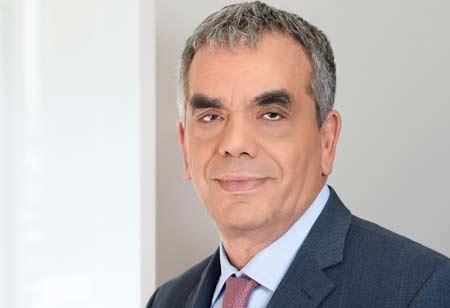
Ioannis Roussos is a results-driven professional, known for his strong analytical skills, global mindset, and creativity. With over 30 years of experience at Eurobank, Roussos currently serves as Assistant General Manager. His extensive experience and leadership in the banking sector make him a valuable asset in driving innovative financial solutions.
In an exclusive interview with Enterprise Security Magazine Europe, Roussos shared his invaluable insights regarding developments within the sector, the prevailing challenges, and possible solutions.
A Career Shaped by Resilience, Innovation, and International Growth
I have been with Eurobank since the very beginning, joining in 1994 in an entry-level position. At that time, the bank was a small institution, newly acquired from Melt and Trade. This acquisition marked the beginning of Eurobank, which has since grown to become one of Greece’s leading private banks.
My early responsibilities were in custodian services and treasury sales, where I progressed from supervisor to manager. As the bank evolved, I transitioned into product development, focusing on savings and investment products for retail customers. Over the years, I remained rooted in the retail side of the business.
From 2005 to 2009, just before the financial crisis, I led deposit products across the group. This broadened my scope and provided valuable international experience as Eurobank grew into Romania, Bulgaria, Serbia, Ukraine, and Poland. It was a formative period that deepened my understanding of cross-border banking and scalability.
When the crisis hit, Greece entered a prolonged recession. Like many others, our bank came under public control. We worked intensively to stabilise Eurobank and eventually restore it to private ownership and profitability, a significant milestone in our journey.
Today, I serve as Assistant General Manager, overseeing savings, deposits, and the fee-based payments business, which are key components of the bank’s liabilities and profitability. My expertise remains rooted in retail deposit and investment products, as well as payment services.
Following years of turbulence, our focus is once again on Greece. We are optimising three core areas, such as savings, investments, and payments, which drive a significant share of group profitability. I also sit on the bank’s transformation committee, contributing to strategic initiatives in digitalisation, cultural evolution, and customer service innovation.
Leadership Evolution in Action
A persistent challenge in the Greek market has been low financial literacy around savings and investment products. Compared to other European countries, our customers often lack confidence or familiarity in managing investments.
In response, my leadership has focused on building an inclusive investment ecosystem, making these products accessible to a wide range of customers, from modest income individuals to high-net-worth clients. We have worked across departments to democratise access to investment tools and services.
“Leadership in this era requires balancing regulatory safety with speed, innovation, and customer-centricity. Decisions must be made quickly and thoughtfully, based on data and evolving trends.”
One example is our fully digital professional investment portfolio service, starting at just €5,000. Traditionally reserved for private banking clients with €1 million or more, this offering now allows retail customers to access tailored portfolios based on their goals and risk profile, supported by an investment committee and automated rebalancing.
This approach reflects our shift to better serve all segments, from younger customers to pensioners, by providing a secure, scalable way to engage with investment opportunities beyond traditional low-yield deposit accounts. This leadership evolution is driven by continuous learning, internal innovation, and close collaboration with our asset management teams to deliver meaningful, customer-centric solutions.
Tracking Success in Digital Initiatives
To assess the effectiveness of our digital transformation efforts, we rely on a comprehensive set of measurement frameworks.
Customer satisfaction is rigorously monitored through Net Promoter Score (NPS) surveys at multiple points, including during and after transactions, and upon product purchases. We also utilise a sales quality system to ensure that customers not only receive the product they need but also fully understand it.
Beyond satisfaction, we evaluate business outcomes through market share analysis, penetration rates, profitability, and customer retention. We are currently the market leader in investment products in Greece and continually benchmark ourselves against our competitors.
Our penetration rates have increased, and our profitability has more than doubled in this domain. We maintain a low complaint rate and have a positive regulatory footprint, which contributes to our brand credibility and market reputation.
In addition to external metrics, we also monitor employee satisfaction. Understanding how our teams feel about their roles and the transformation process is essential to sustaining performance.
Evolving Responsibly With Technology
We take a pragmatic, regulated approach to emerging technologies, particularly cryptocurrencies. While some customers are turning to fintechs for crypto services, as a systemic bank, we must remain cautious given the speculative nature of these assets and the regulatory uncertainties involved.
We continue to closely monitor developments in digital currencies, particularly the potential introduction of a digital euro; however, we have not yet incorporated crypto products into our portfolio. While we recognise the risk of losing engagement with younger customers, it's essential to wait for a more transparent regulatory framework before acting.
Artificial Intelligence (AI) is, however, a top priority. Although still in the early stages, we see immense potential in applying AI to back-office functions and customer support. A key focus area is enhancing investment advisory services by using AI to analyse customer behaviour and deliver personalised portfolio recommendations.
We're also preparing for evolving European regulations around AI, instant payments, and the PSD2 and PSD3 directives. Successfully integrating these technologies requires substantial investment and close alignment with compliance requirements.
Advice for Next-Gen Bankers
To those aspiring to lead in banking, particularly in areas such as customer experience and digital transformation, my advice is to move away from traditional banking mindsets and adopt a retail and digital-first approach.
Legacy systems and mindsets are still deeply embedded in traditional banks, but new generations of customers have entirely different expectations. It’s no longer just about preserving customer assets; it’s about understanding and responding to what the customer genuinely needs, whether that involves crypto, AI, or other innovations.
Leadership in this era requires striking a balance between regulatory safety and speed, innovation, and customer-centricity. Decisions must be made quickly and thoughtfully, based on data and evolving trends. Success comes not just from protecting what exists but from being ready to build what comes next.