Financial Services Review: Specials Magazine

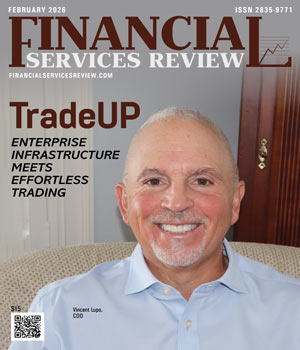
TradeUP was built on an infrastructure-first philosophy. Rather than layering technology on top of outsourced systems, the firm developed its clearing operations, trading architecture, risk controls, and data infrastructure internally before scaling its client-facing platform. That sequencing defines its operating model. By maintaining ownership across the full trade lifecycle execution, clearing, custody, settlement, margin financing, and regulatory reporting, TradeUP preserves direct accountability over performance and risk. The vertically integrated structure reduces dependency on external vendors, strengthens operational transparency, and enables coordinated oversight during periods of market volatility. This architecture positions TradeUP not simply as a brokerage platform, but an one-stop financial solution catering to a diverse spectrum of client needs.
Investment Services
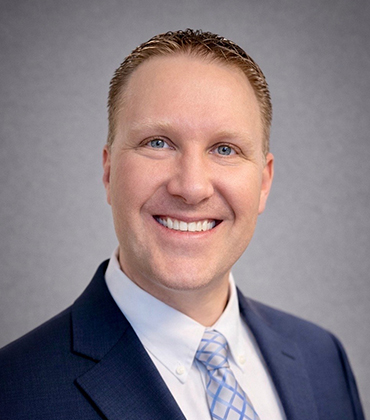
In the world of wealth management, where commissions and sales quotas often dictate client interactions, Schutte Financial has carved a different path, one rooted in a fiduciary decision-making process. Founded in 2016 by Daniel Schutte, MBA, the independent registered investment advisor (RIA) firm has positioned itself as a leader in client-first financial planning. At its core, Schutte Financial prioritizes transparency, long-term client success, and a pressure-free environment where advice is shaped by individual goals rather than external pressures. For Schutte, the inspiration to build such a firm came from his experience working at large advisory organizations. He quickly observed how traditional models sometimes allowed sales incentives to influence client outcomes. This realization led him to launch a firm where clients could receive advice based solely on their best interests, without the typical sales-driven motives. “We believe that our fiduciary process should guide every decision, from financial planning to investment strategies,” Schutte explains. “It’s about removing pressure and allowing clients to make informed, confident decisions about their financial future.”
CPA Firms
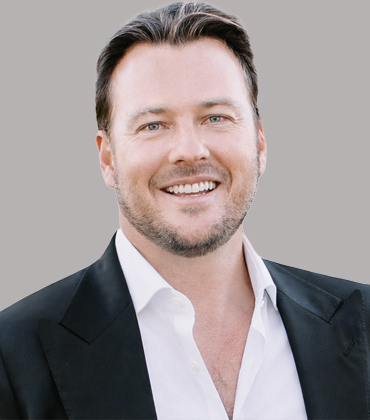
When cryptocurrency first entered the mainstream, tax reporting struggled to keep pace. Most investors were forced to rely on do-it-yourself platforms that required them to upload wallets, classify transactions, and generate reports on their own. Without accounting expertise, many simply hoped their records were accurate enough to satisfy the IRS. The process was confusing, time-consuming, and risky. Count On Sheep was founded to remove that burden. Instead of asking investors to become their own accountants, the company built a service model centered on professional digital asset reconciliation (DAR). Its founders assembled a team of experienced tax and accounting specialists, many with Big Four backgrounds, and trained them to work directly with blockchain data. The goal was not to replace existing CPAs, but to support them by delivering clean, reliable crypto tax reports. At the center of the company’s work is Digital Asset Reconciliation, a method it helped pioneer. Unlike traditional accounting, blockchain accounting requires tracing transactions across public ledgers, wallets, and exchanges. Each movement of a digital asset must be verified and connected to its original cost basis. The process more closely resembles forensic accounting than bookkeeping. “By reconciling a client’s full transaction history, we provide the clarity that most crypto investors lack,” says Nick Slettengren, co-founder and CEO.
Financial Compliance
STP Investment Services is responsible for one outcome across the fund lifecycle: keeping administration and compliance aligned so interpretation gaps, handoffs, and control failures never reach investors or regulators. The firm operates as an integrated layer that unifies fund administration, compliance, and middle office oversight under a single operating discipline designed to prevent errors before they surface. STP supports hedge funds, private equity firms, and registered investment advisors across accounting, reporting, reconciliations, filings, and compliance consulting. Those functions are not delivered as parallel services. They are run together, reducing the risk created when administration and compliance sit with different providers and interpretations diverge. “Our approach has always been technology-driven and people-driven at the same time,” says David Goldstein, Director, Product, Fund Services. “Systems create consistency, but experienced operators make sure outcomes are right and defensible.” Service with Context STP’s model centers on what it calls service with context. Each client has a dedicated account manager acting as a director of operations, responsible for review, consistency, and quality control. In addition to the Account Manager, each client has a Client Service Team that is structured and expertise driven – Examples inclined Compliance Consultant, Managed Services Consultant, Fund Accountant and more. While teams execute tasks, account managers ensure decisions align with the client’s structure, strategy, and regulatory profile, helping to catch errors and misalignment early.
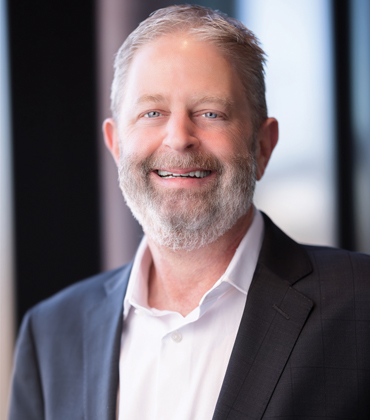
Financial Planning/Retirement
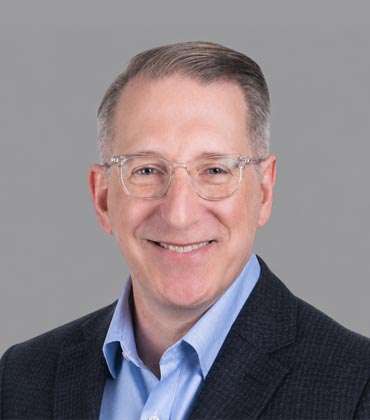
Recent Technological Advancements in Compliance and How You Tackle These Challenges in Your Company
Steve Harris, SVP Chief Ethics & Compliance Officer and Head of Employment Law, Lincoln Financial Group [NYSE: LNC]
Financial Brokerage Firm
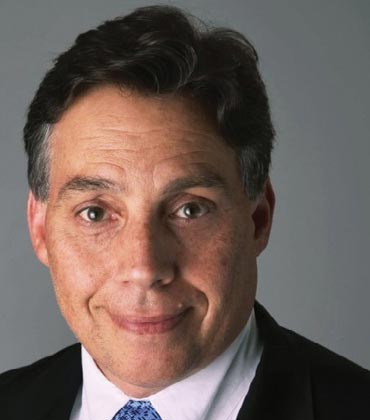
Strategic Planning: What Is The Shelf Life Of A New Strategic Plan?
Paul S. Young, Chief Financial Officer, Liberty Bank
Broker Dealer Firms
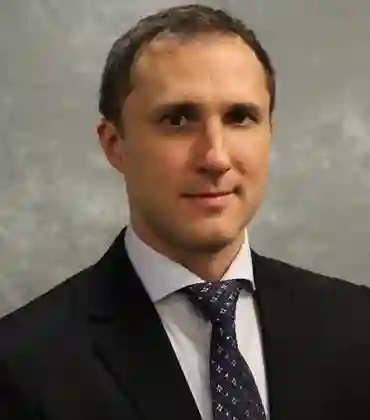
Engineering Trading Systems - Challenges and Opportunities
Denis Imaev, Managing Director, Head of Algorithmic Trading Development, Cantor Fitzgerald
Financial Planning/Retirement
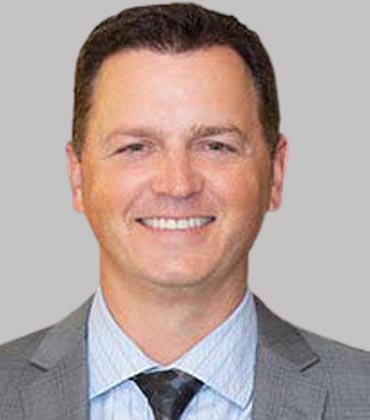
Comparing the Housing Market in 2008 vs. Today - Are home prices about to collapse?
Jason Obradovich, Chief Investment Officer, New American Funding
Financial Planning/Retirement

Credit Risk As Customer Service
Clayton Dexter, Underwriting Manager, Vice President, ANB Bank
Financial Planning/Retirement

Navigating the Wellness Landscape and Leveraging Digital Marketing for a Positive Impact
Aura Rebelo, CEO Fully wellness Ecosystem, Prudential International Insurance
Financial Planning/Retirement
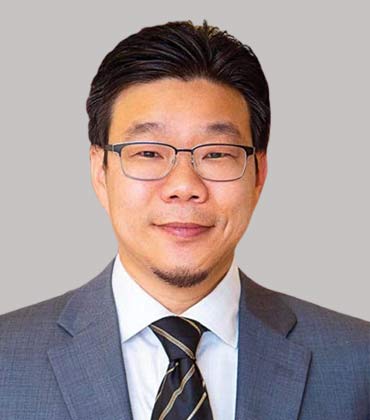
Leading Finance Forward with Innovation in Focus
Richard Kung, Chief Financial Officer, CTBC Bank Corp. (USA)

IN MY OPINION
Financial Planning/Retirement
Recent challenges in the industry and how Internal Audit can help
Jacqueline Breslauer, Executive Vice President - Chief Audit Executive, Valley Bank

LAST WORD
Financial Planning/Retirement
Navigating the Wellness Landscape and Leveraging Digital Marketing for a Positive Impact
Aura Rebelo, CEO Fully wellness Ecosystem, Prudential International Insurance
IN FOCUS


EDITORIAL
Disciplined Innovation in Financial Services
Capital markets infrastructure, regulatory accountability, and disciplined advisory models are transforming the way financial institutions operate in volatile environments. This edition of Aerospace and Defense Review examines how platform ownership, compliance rigor, and fiduciary discipline are redefining performance across trading, digital assets, and wealth management.
Leading this issue, TradeUP is recognized as the Top Advanced Trading Platform 2026. Unlike many fintech brokerages, TradeUP built its clearing operations, trading systems, and risk controls in-house before developing its retail interface. Its self-clearing model, disciplined risk culture, and unified technology architecture enable end-to-end control across retail, institutional, and correspondent clearing services. By combining institutional-grade infrastructure with an intuitive trading experience, TradeUP delivers operational resilience under real market volatility.
In the digital assets space, Count On Sheep earns distinction as the Top Crypto Tax Management Service of 2026. The firm specializes in Digital Asset Reconciliation, tracing blockchain transactions across wallets and exchanges to deliver CPA-ready, IRS-compliant reporting. Its forensic approach reduces compliance risk while identifying legitimate tax optimization opportunities. Meanwhile, SCHUTTE FINANCIAL, named Top Registered Investment Advisor 2026, reinforces fiduciary discipline through transparent, fee based advisory services. By aligning investment strategy strictly with client interests and integrating tax-efficient technology within a structured fiduciary framework, the firm prioritizes long-term stewardship over transactional incentives.
Executive insights further contextualize these themes. Jacqueline Breslauer, Executive Vice President and Chief Audit Executive at Valley Bank, highlights emerging risks including social media volatility, AI governance, and liquidity pressures, underscoring the role of modern internal audit as a strategic partner within the Three Lines of Defense model. Aura Rebelo, CEO of Fully Ecosystem at Prudential International Insurance, emphasizes the necessity of integrated digital ecosystems to enhance engagement and strengthen enterprise-wide strategy.
Collectively, these organizations reflect a sector advancing through infrastructure ownership, compliance precision, and disciplined innovation. As financial complexity increases, durable systems and accountable leadership will define sustained success. Readers are encouraged to explore the full features shaping this evolving landscape.
