Financial Services Review: Specials Magazine
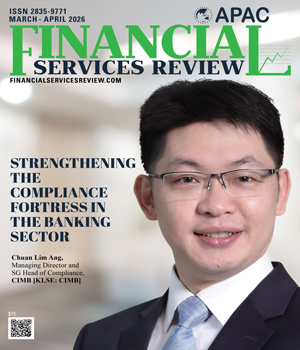
As the head of compliance at a major bank, you are on the receiving end of regulatory expectations. How are you and other compliance practitioners managing the increasing list of demands? Regulatory requirements continue to evolve and expand, and this trend doesn’t look like it is stopping anytime soon. Across most jurisdictions, you also see regulators committing to a more intensive and intrusive supervisory approach to better manage the risk in the financial sector. It’s certainly no laughing matter to be at the receiving end of regulatory expectations, but fortunately, compliance is not alone in holding the fort. It is a bank-wide effort where we partner with various business units and teams such as operations and technology to meet increasing regulatory demands and expectations. While compliance practitioners are very conversant with rules and regulations—the ‘what’ needs to be done and ‘why’ (or policy intent)—we need to collaborate closely with other stakeholders to operationalize what’s needed considering the bank’s set-up—this is the ‘who’ and ‘how.’ And it’s important to get all these right at the onset, with strong senior management oversight, appropriate frameworks and processes, supported with smooth execution. Another approach is to make good use of the consultation phase by providing constructive feedback to the regulators when they are formulating regulatory proposals so that policy objectives can be achieved while simultaneously taking into account industry concerns and operational challenges. There’s a saying across the industry that compliance teams need to continually ‘do more with less.’ What's your view on the ability to use artificial intelligence (AI) and data analytics (DA), given the present state of technological and product development? “Do more with less”—that is the new mantra not just for compliance, but across all sectors and industries. Indeed, leveraging AI and DA co
Private Equity
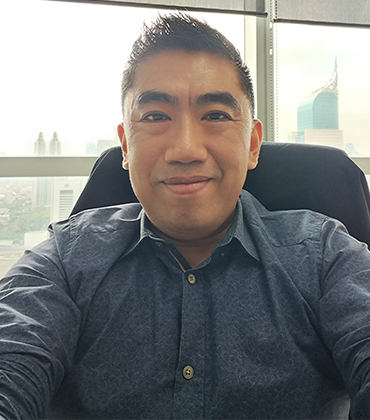
Ideas Capital Management (ICM) approaches private equity with a defined investment discipline that does not operate under a pure return-maximization model. The firm targets a 23 percent internal rate of return (IRR) and applies financial engineering where appropriate, but opts for a more balanced approach to investments by allocating capital toward environmental and community initiatives as part of its deal structuring, while maintaining its required return threshold. “We believe long-term performance in Southeast Asia depends on disciplined governance, cost control and stakeholder alignment, so we evaluate opportunities based on whether they can deliver positive impact while generating return above our required hurdle rate,” says Stevanus Juanda, principal and chief investment officer. ICM structures its investments with the understanding that many project owners and strategic investors remain committed to the businesses well beyond a fund’s lifecycle. In select cases, the firm itself continues as a shareholder even after fund exits, remaining aligned with management teams that also stay invested over the long term. Rather than focusing solely on exit, ICM prioritizes strong knowledge of ESG investing, cost discipline and execution oversight. Ongoing engagement alongside operators serves as a governance mechanism, supporting risk management and performance consistency, particularly in markets where long-term outcomes depend on sustained stakeholder participation..
Accounting and Tax Service
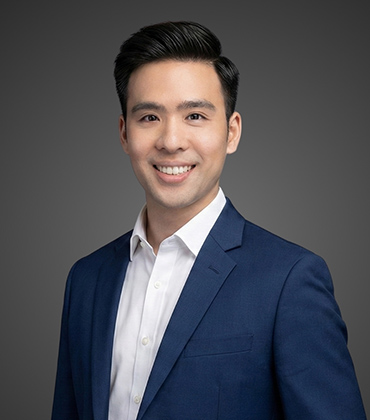
Thailand’s business decisions increasingly carry legal and tax consequences that extend far beyond formal documentation. A corporate restructure, a cross-border transaction, or even a routine compliance choice can quietly shape future risk, cost, and operational flexibility. Yet many organizations still rely on advice that treats each issue in isolation, solving for the present while leaving long-term implications unexplored. In an environment this layered, clarity does not come from more checklists, but from counsel that understands how law, tax, and commercial strategy move together. Providing that kind of guidance is Legalese, an independent law firm with integrated tax advisory capabilities, based in Bangkok. Formed by practitioners with high experience advising on complex Thai and cross-border matters, the firm was established to help clients navigate legal and tax complexity in ways that support growth rather than constrain it. It works with private individuals, start-ups, local enterprises, and multinational corporations, all facing the shared challenge of operating confidently within Thailand’s intricate legal and regulatory environment. Why does Legalese believe that legal advice must account for tax and commercial strategy simultaneously? At the heart of Legalese’s approach is a belief that legal matters rarely exist in isolation. Corporate structuring decisions carry tax implications. Transactions reshape regulatory and employment obligations. Even routine compliance choices can influence future flexibility and cost. By recognizing how these dimensions intersect, the firm approaches each engagement holistically, ensuring that advice is legally correct and strategically sound..
Wealth Management
For high-net-worth families, wealth isn’t a collection of holdings. It’s a living, breathing system. Portfolios stretch across geographies, asset classes and generations. Investment insight is rarely the issue. The challenge lies in acting on that insight. Executing decisions swiftly and precisely across a web of global custodians, advisors and product providers is where real complexity comes crashing in. And that’s where most traditional systems fall short. Sino Suisse Capital’s precision-driven platform, myAlphaTrader, was built as a direct solution to eliminating those bottlenecks and enhancing clarity at every step. Its distinction is most visible in how market data is processed and executed. Where conventional advisors toggle between emails, spreadsheets and portals to compare investment options, Sino Suisse Capital’s infrastructure is already connected, via secure API integrations, with a network of banks, custodians and platforms. The system captures incoming data automatically, interprets it and ranks product pricing in real time based on regulatory execution standards. There’s no manual scanning or delays. Just the best available decision surfaced instantly. “We built an architecture that thinks in sync with our clients’ intent,” says Franck Chen, president and chief operating officer. “Not after the fact, but in the moment. Because when timing defines trust, speed without strategy is just noise.” That strategic intelligence isn’t detached either. It’s deeply human. Every client engagement begins with nuance, not just assets and allocations but ambitions, concerns and life patterns. Insight becomes the foundation for how the system adapts and responds, ensuring that decisions remain personalized, even as scale and automation step in. For families planning across generations, that system extends even further through intelligent structures like Singapore’s Variable Capital Company (VCC). These frameworks allow for seamless consolidation of global assets, efficient estate transitions and cross-border compliance, without adding new layers of complexity. This translates into a model that doesn’t just manage wealth but anticipates it. It operates as an embedded strategist. Clients aren’t left waiting for updates. They move confidently, knowing their portfolios and goals are being managed with intelligence designed to think ahead.

Investment Advisory
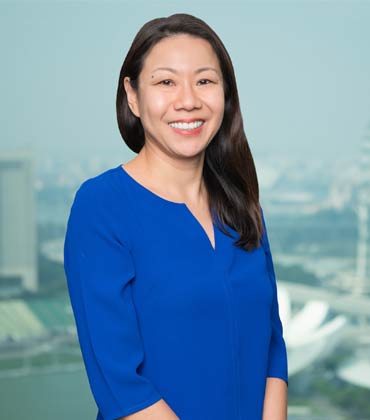
Learning from the Food Industry to Progress Sustainable Investing
Eugenia Koh, MD, Global Head, Sustainable Finance, WRB, Standard Chartered Bank [LON: STAN]
Wealth Management

Navigating the Complexities of Commercial Finance
Tom Wallace, Director of Transformation & Project Management, Volvo Financial Services
Business Loan

The Role of Finance Transformation In Organizational Success
Pablo Montanes, Associate Director & Head of Performance North America, Kraft Heinz
Corporate Advisory

Elevating Our Commercial Capabilities to Lead the Energy Transition
Rebecca Yu, Head of Transformation, Endeavour Energy (NSW)
Financial Risk & Compliance
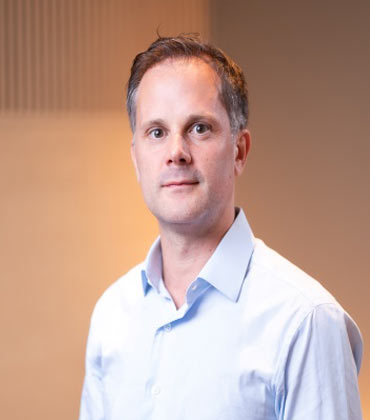
Turning Compliance into a Financial Advantage
Thomas LAGRIFFOUL, Regional Director of Compliance APAC, Coface

IN MY OPINION
Private Equity
Decision Making: A Road to Leadership
Dean Humphreys, Chief Financial Officer, Village Roadshow Theme Parks

LAST WORD
Wealth Management
Financial Freedom - The New Definition of Wealth
Dina Kotsopoulos, Head Of Daily Banking & Superannuation, ING Australia [NYSE: ING]
IN FOCUS

Navigating the Complexity and Opportunity of Taxation Services in the APAC Region
Taxation in APAC evolves through digitalization, regulatory reforms, and cross-border growth, requiring advanced technology, strategic expertise, and adaptive solutions to support compliance.

APAC Private Equity: Strategies for Sustainable Growth
Private equity firms in APAC play a key role in driving growth, innovation, and transformation across various industries.
EDITORIAL
From Fragmentation to Integration: A New Approach to Financial Strategy
The next phase of financial services growth will not be driven by expansion alone, but by precision in structuring, risk calibration, and long-term alignment. As asset values shift and client sentiment grows more cautious, demand is increasing for practical clarity over abstract projections. In this edition of Financial Services Review, we examine how institutions and advisors are responding with integrated thinking, disciplined risk management, and sharper alignment between strategy and execution.
This issue recognizes Ideas Capital Management as the Top Private Equity Firm in APAC 2026. The firm applies a disciplined investment approach targeting a 23 percent IRR while embedding ESG considerations directly into deal structuring. Led by Stevanus Juanda, Principal and CIO, ICM emphasizes governance and long-term stakeholder alignment while maintaining its required return thresholds.
Legalese is recognized as the Top Taxation Service in APAC 2026. Based in Bangkok, the firm advises at the intersection of law, tax, and commercial strategy, operating an integrated model where legal and tax professionals work side by side. By anticipating how regulatory and cross-border considerations converge, Legalese enables early risk identification and preserves transaction value across restructurings and investment planning.
Leadership perspectives in this issue further ground the operational realities of the sector. Dina Kotsopoulos, Head of Daily Banking & Superannuation at ING Australia, reframes wealth as financial freedom, emphasizing the industry’s responsibility to support informed decision-making amid cost pressures and economic uncertainty. At the operational level, Tom Wallace, Director of Transformation & Project Management at Volvo Financial Services, describes a necessary recalibration of asset valuation and repayment structures, outlining the need for automated credit assessment, ongoing vigilance over asset values, and repayment models aligned with client cash flows to better manage emerging lending risks.
Together, these insights underscore a clear mandate for the industry integrate expertise, anticipate risk, and design solutions anchored in long-term resilience.
