



Investment Services Europe | Financial Services Review

Investment Services Europe

Resilient International Solutions: Where Global Commodity Traders Gain Institutional Financing Capability
Resilient International Solutions
Resilient International Solutions: Where Global Commodity Traders Gain Institutional Financing Capability
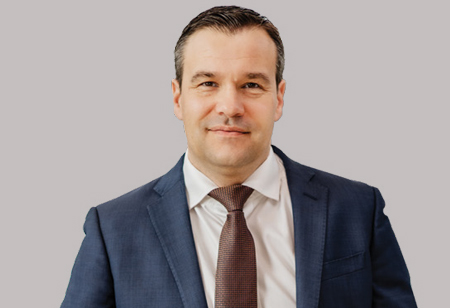
Stefan Butler, Director
What prevents commodity trading opportunities from translating into accessible institutional financing?

In global commodity trading, opportunity alone rarely secures financing. Even when a proven supplier is in place, a buyer is committed and the margins are clear, access to liquidity is not guaranteed. Capital is not scarce. But structuring the transaction in a way that aligns with how the financial institutions assess risk is what builds lender confidence to fund it.

That gap has widened in recent years. Traditional bank appetite for mid-market and complex cross-border trade has tightened, while a broader “flight to quality” has pushed capital toward larger, more established and institutionally aligned transactions. For many trading businesses, the challenge is no longer opportunity; it is translating that opportunity into a form the financial system is willing to support.

Resilient International Solutions operates at that critical intersection.

Its work centres on representing corporates involved in cross-border trade, from producers and exporters to trading houses and translating their trade transactions into structures the financial market can understand, assess and support.

“Our role is less about chasing capital and more about shaping quality transactions into a lender-ready framework, before they ever reach a lender’s desk or a strategic stakeholder,” says Stefan Butler, director.

That distinction reflects Butler’s 25 years in trade finance on the banking side, where decisions are driven less by opportunity and more by structure, risk alignment and execution credibility. A lender does not evaluate intent; it evaluates exposure. Each element of the transaction, counterparties, logistics, jurisdiction, pricing and security, must fit within a framework that can be understood, priced and supported.

Resilient applies this perspective to every engagement. Transactions are reworked from the ground up; risk is redistributed across the supply chain and supporting mechanisms are introduced to strengthen the overall structure. Only once that foundation is in place is the deal positioned in the market, matched with counterparties whose risk appetite aligns with the transaction. Resilient’s counterparties include top-tier banks, niche financial institutions, hedge funds, asset managers, family offices, alternative financiers and other specialist market participants.

As a result, businesses can trade with greater certainty, improve profitability and scale on the strength of the transaction rather than the size of their balance sheet. At the same time, each successfully structured deal builds credibility within the financial system, shaping how future opportunities are understood, assessed and supported.

Coordinating Multiple Stakeholders Around drag down Structure

How does coordinating multiple stakeholders improve execution and risk alignment in trade finance?

Resilient’s model is built on end-to-end structuring, creating a more collaborative approach across a trade chain whose stakeholders have long operated in silos.

Our role is less about chasing capital and more about shaping quality transactions into a lender-ready framework, before they ever reach a lender’s desk or a strategic stakeholder.

Trade transactions often require insurance coverage, export credit support, FX hedging, legal frameworks, logistics alignment and warehousing controls. Resilient brings them into a single structure, aligning financial, operational and risk considerations before approaching the market.

“We don’t just look at what a client has and send it to the market,” Butler explains. “We look across the full supply chain, identify where the vulnerabilities are and give our clients the strongest possible chance of success.”
Valhyr Capital: A Structured Approach to Private Markets
Valhyr Capital
Valhyr Capital: A Structured Approach to Private Markets
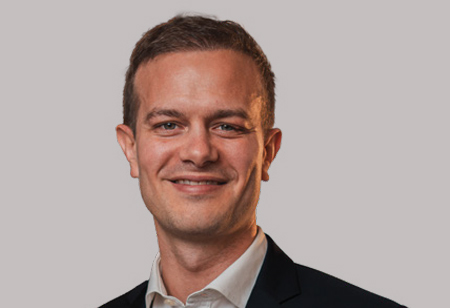
Olivier Herbout, President
What challenges arise in managing capital calls, distributions and deployment cycles?

Private market investing often requires managing capital calls, distributions and multi-year deployment cycles, which can delay full exposure and create ongoing cash flow complexity. In response, Valhyr Capital introduced XFUND, an evergreen fund combining private equity and private debt within a single structure, simplifying allocation and capital deployment.

XFUND combines long-term growth with more immediate income. Private equity supports capital appreciation, while private debt generates early returns, reducing the waiting period often seen in traditional investments.

This structure also addresses the J-curve effect, in which returns are limited or even negative in the early years. XFUND blends private debt for early income with private equity for long-term growth, mitigating this effect through earlier income generation.

Improving Capital Deployment Efficiency

How does early capital allocation influence exposure and deployment efficiency in private markets?

Valhyr Capital’s structure reflects Olivier Herbout’s experience in institutional investing and wealth advisory, including roles at Goldman Sachs and as founder of Ramify. Traditional private market investing often allocates capital over several years. This requires investors to manage capital calls, distributions and uninvested cash, which can delay full market exposure.

XFUND alters this by allocating approximately 85 percent of capital early in the investment cycle, allowing investors to reach target exposure without extending deployment timelines. This reduces the need to coordinate inflows and outflows across multiple investments while minimizing the drag associated with uninvested capital.
Schmiegelow Fondsmæglerselskab: Governing Capital through Independent Macroeconomic Conviction
Schmiegelow Fondsmæglerselskab
Schmiegelow Fondsmæglerselskab: Governing Capital through Independent Macroeconomic Conviction
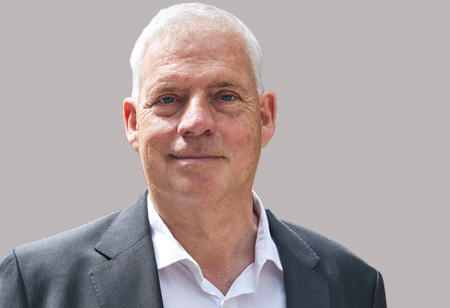
Peter Schmiegelow, Founder and CEO
How does independent macroeconomic conviction shape long-term capital allocation?

The forces that shape long-term capital outcomes do not wait for consensus to form. Inflation, interest rates, political stability and financing conditions all shift well before market prices catch up. By the time the adjustment is visible, most of the opportunity has already been set.

Schmiegelow Fondsmæglerselskab A/S was built to act in that gap.

Founded in 2011 and regulated by the Danish Financial Supervisory Authority, Schmiegelow is a Copenhagen-based independent multi-family office advising high-net-worth families and institutional clients on strategic asset allocation, manager selection and capital governance. It does not manufacture products or distribute third-party investments. Its role is purely fiduciary.

The firm’s conviction is that asset allocation, not security selection or market timing, drives the overwhelming majority of long-term outcomes. With a typical horizon of three to five years, Schmiegelow does not react to market movements. It anticipates them, forming independent views on structural trends and positioning portfolios before the broader market recognises the shift.

“We are not trying to predict what markets will do next quarter. We are trying to understand which economic regime is forming and position capital accordingly, years before the consensus catches up,” says Peter Schmiegelow, founder and CEO. The firm’s approach has been recognised with the Investment Consulting Services of the Year 2026 award by Financial Services Review.

Allocation Governed by Structural Reality

How does structural regime analysis influence portfolio resilience decisions?

What if we are wrong?

At Schmiegelow, that question is not rhetorical. It is the foundation of every portfolio decision. The firm builds for resilience over leverage, capital preservation over marginal upside and portfolios structured so clients can stay invested through volatility rather than being forced into ill-timed exits.

We are not trying to predict what markets will do next quarter. We are trying to understand which economic regime is forming and position capital accordingly, years before the consensus catches up.

That discipline produced one of the firm’s most consequential calls. Years before inflation became a consensus concern, Schmiegelow began repositioning. As fiscal deficits widened, sovereign debt burdens climbed and the structural deflation of globalisation faded, the firm advised clients to move portfolios toward real assets and away from long-duration fixed income.

Commodities and mining equities replaced conventional bond allocations. Bond duration was avoided to reduce sensitivity to rising rates.

When inflation arrived in force after the pandemic, those decisions delivered. Gold and silver miners, allocated at 10 to 15 percent reflecting conviction rather than benchmark alignment, generated returns of approximately 100 percent in select positions before exposure was reduced. The remaining allocation has since been concentrated toward junior miners with high upside, reflecting a view that the industry is entering a consolidation phase.

Across client portfolios, the long-term return ambition has historically been approximately nine percent IRR, with limited leverage ensuring compounding survives regime changes intact.

Manager Governance as the Foundation of Capital Protection

Why is manager governance central to protecting long-term capital?

Allocation determines where capital goes. Manager governance determines whether it comes back.

Schmiegelow selects external managers not by following consensus on who is raising capital, but by evaluating firsthand how each manager structures investments and manages downside. The gap between managers who compound capital and those who destroy it is almost always a governance gap.

Strong governance means investments structured to survive stress, not just perform in calm environments. Weak governance exposes capital to permanent loss, even when the thesis is sound. Schmiegelow’s focus is on ensuring portfolios are built so clients can stay the course through volatility, not be forced into ill-timed exits.

Private credit can become a second strategic pillar alongside focused listed equities. In direct lending, maintenance covenants tied to operating performance give the lender early warning signals and negotiating leverage. While sponsor-backed mid-market lending has become crowded, edge can still be created through niche focus: sector specialisation, non-sponsor lending, larger ticket sizes or structures that preserve protections as competition increases.
FT Strategies: Turning the Attention Economy into an Advantage for Financial Services
FT Strategies
FT Strategies: Turning the Attention Economy into an Advantage for Financial Services
Joanna Levesque, Managing Director, FT Strategies
Information is abundant. News reports, podcasts and posts all compete for the same fleeting moments of attention, making communication one of the most valuable currencies in modern business.

FT Strategies, the specialist consulting firm owned by the Financial Times, helps organisations transform that attention into relevance and lasting value in a noisy digital world.

“We often say that every company is now, in some way, a media company,” says Joanna Levesque, FT Strategies’ managing director. “What we mean by that is every organisation produces content to reach its audience and build credibility.”

The idea is rooted in observation. Technology has transformed not only how people consume information, but how they form trust. Financial institutions that once competed on performance or product innovation now compete on how effectively they connect with clients, investors and the broader market. A report from an investment firm, a white paper from an insurer or a video from a private equity house are all part of the same attention economy. Yet, too often, they remain static outputs rather than dynamic channels of engagement.

The integration of strategy, storytelling and data allows us to bridge the logic of the newsroom with the discipline of the boardroom.

That’s where FT Strategies steps in. Its “Create, Distribute, Monetise” framework turns communication into a living system, integrating strategy, storytelling and data into one continuous loop. It helps clients decide what to create, how to distribute it and how to monetise it through measurable impact.

Designing for the Attention Economy

The starting point is always the audience. The question is no longer “who is the audience” but “what earns their time.”

FT Strategies helps research teams meet that expectation by translating dense analysis into formats that fit real behaviour through interactive reports, modular summaries, dashboards that allow users to explore raw data and formats that move as quickly as the questions they are trying to answer. It is a deliberate way to turn institutional knowledge into experiences that deepen engagement and signal which content is truly premium.

Data closes the loop by showing firms what is truly happening within their content ecosystem. Drawing on the practices that shaped the Financial Times’ subscriber strategy, FT Strategies uses natural language processing to tag and map an organisation’s full content output. It establishes a baseline view—which themes attract readers, how far users scroll, where they disengage and what prompts repeat visits. Combined with web analytics and first-party data, this diagnostic layer reveals which topics carry weight, which formats underperform and where untapped demand sits. It is the factual foundation behind the create-distribute-monetise logic, giving financial institutions a clear view of what they produce and how audiences respond.

What follows is turning that behavioural insight into commercial clarity. FT Strategies helps clients decide how content should work for the business; which material earns a subscriber gate, which deserves open distribution and which formats should be retired or redesigned. AI-generated tagging shows where attention peaks or fades, allowing organisations to tailor access, pricing and lead-generation strategies around real patterns rather than editorial instinct. This shifts the creative process from assumption to evidence. Each decision—story selection, structure, tone—flows from a clear understanding of what the audience values and how that attention can support growth.

“Our financial institution clients are increasingly realising that the attention economy isn’t just a communications issue; it’s a business issue,” says Levesque. “We help them thrive by showing them how to use their voice with purpose.”

Making Messages Move

Once a company knows what to say and why, the next challenge is how to make that message move. This is where distribute comes into play. It helps clients rebuild the way they plan, produce and publish, embedding newsroom agility inside corporate systems. That doesn’t mean turning bankers into journalists. It's just applying the same editorial discipline to complex corporate communication.

The goal is to make content flow as naturally as communication itself—fast, collaborative and audience-aware.

To achieve that, FT Strategies designs new workflows and decision frameworks that treat content as a continuous asset. Editorial, marketing and strategy teams learn to work from shared dashboards and aligned timelines, allowing every new release to build on what came before. Financial institutions learn to operate as leading media organisations, responsive to data, disciplined in process and creative in execution.
GK Wealth: Prioritising Wealth Preservation across Market Cycles & Safeguarding Legacies for the Next Generation
GK Wealth
GK Wealth: Prioritising Wealth Preservation across Market Cycles & Safeguarding Legacies for the Next Generation
Virna Kazazian, Founder and CEO
Over the past few decades, Global Investors have learned that prosperity is never without turbulence. Market crashes, sudden rebounds, and geopolitical shocks have shown that wealth needs as much protection as growth, and clarity, trust, and steady judgment through every cycle are the primary requirements for investors. Sustained by deep trust and enduring continuity, GK Wealth is built on relationships that span over two decades.

GK Wealth is a discretionary investment management firm that deliberately avoids mass-market financial products and cookie-cutter strategies. Instead, it anchors its narrative on long-term client relationships, bespoke portfolio construction, and a principled stance against excessive risk or leverage. Its clients include institutions, family offices, and ultra-high-net-worth individuals, many introduced by long-standing relationships that extend across generations.

The portfolios are built from the ground up, reflecting each client’s risk appetite, liquidity requirements, time horizons, and family priorities. With an open-architecture framework, the company draws on global markets without bias, guided by a multilingual team that strengthens accessibility.

Tailored Portfolios, Not Packaged Products

The company’s onboarding process goes beyond financial disclosures, addressing each client’s needs, liquidity, succession plans, and risk tolerance to deliver truly bespoke portfolios.

“We partner with clients to help safeguard and build wealth across generations,” says Virna Kazazian, Founder and CEO at GK Wealth.

It discourages excessive leverage and illiquid alternatives, aiming for clients to have the ability to remain invested through downturns and positioned to benefit if markets recover. It aims to ensure transparency and seeks to explain risks clearly before any investment decision is taken. Regular client interactions are undertaken to assess ongoing suitability and alignment with client objectives.

Open Architecture and Disciplined Selection

While many firms remain tied to proprietary products and partner agendas, GK Wealth distinguishes itself through an open-architecture approach. Investments are sourced globally without bias and are rigorously assessed against three non-negotiable criteria: liquidity, quality, and pricing. The firm prioritises assets with the potential to remain liquid and tradable across different market cycles, helping clients retain flexibility during turbulent periods. The firm recognises, however, that during sharp downturns liquidity often contracts and trading margins widen, making flexibility more challenging to preserve.

The European Investment Landscape: Consulting for Success

Investment consultants in Europe offer expertise in portfolio management, risk mitigation, and regulatory compliance to navigate complex financial markets.

The current economic environment requires people to seek professional investment advice more than ever before. European investment consulting services function as essential support systems for both businesses and individual investors who need to understand complex financial markets. Investment consulting services in Europe deliver specialised solutions that help clients create effective investment strategies while reducing risks and seizing market possibilities.

The investment consulting firms operating in Europe provide essential services that enable businesses to make strategic choices that lead to business expansion and asset protection. The consulting services maintain their vital function in supporting people and companies with their financial objectives as the economic landscape continues to change.

The Role of Investment Consultants in Portfolio Management

Investment consulting services exist primarily to handle the management of investment portfolios. Investment consultants provide expert guidance in developing and overseeing diversified investment portfolios that match the financial needs of their clients. Consultants begin their work by evaluating all client aspects, including their financial targets and risk capacity and investment timeframe. Consultants create investment strategies that aim for maximum returns while controlling the investment hazards that come from different types of assets.

The European investment landscape presents both obstacles and prospects because of its complicated financial framework. The region combines established markets like the United Kingdom and Germany, and France with developing nations that exhibit strong economic development opportunities. Investment consultants need to have extensive knowledge about global financial markets and local market conditions to determine the best investment options. Economic trends and regulatory changes, and geopolitical risks require analysts to remain updated because these factors can directly impact investment success.

Consultants provide various services that include guidance on asset distribution and recommendations for particular investment vehicles, which include stocks and bonds and real estate, and alternative investments. They assist clients in evaluating their current investment portfolios to find areas of improvement and create necessary portfolio modifications that respond to new market developments. The portfolio management method that handles dynamic changes helps clients maintain their investment strategy while their financial objectives change.

Risk Management and Mitigating Financial Uncertainty

The role of investment consultants extends beyond risk management because they offer essential services that companies require. The financial markets demonstrate inherent unpredictability because unexpected events can trigger significant market fluctuations. Investment consulting services help clients handle investment uncertainty through their process of risk identification and analysis, and risk mitigation work.

Investment consultants use portfolio diversification as a core strategic element, which they use to construct balanced investment portfolios. Consultants achieve better risk management outcomes by distributing investments among multiple asset classes and sectors, and geographical regions to decrease risk exposure from particular investment elements. Other asset classes like bonds and real estate function as protective elements that stabilise the entire investment portfolio when equity markets face downturns.

Consultants use advanced risk assessment tools to determine how economic changes and interest rate fluctuations, and market interruptions will affect investment performance. The organisation creates risk management plans that their clients need to protect against potential losses, while their clients need to capitalise on new business possibilities. The assessment of local risks requires consultants to evaluate the specific situations in each European market while they study global economic patterns.

Financial consultants use standard risk management methods to lead their clients through various financial dangers that may arise. The team needs to evaluate how different European markets face currency changes and inflation, and how regulatory updates will impact their economic standing. The risk management methods that investment consultants deliver to clients have been developed into all-inclusive solutions that address the particular requirements of every individual customer.

Adapting to Regulatory Changes and Market Trends

Investment consultants deliver essential knowledge to clients who require assistance with understanding the European regulatory framework that governs their businesses. The European Union (EU) and national authorities implemented regulatory reforms that changed the existing regulatory framework during the past several years. The regulations establish binding rules that organisations must adhere to as they develop their investment plans through tax policies and environmental standards.

Investment consultants working in Europe must remain knowledgeable about all regulatory changes so they can help their clients maintain compliance and achieve the best possible investment results. The EU's MiFID II (Markets in Financial Instruments Directive) has transformed financial market operations by enforcing better investment firm transparency and accountability standards. New sustainability and environmental regulations have created changes in investor behaviour toward socially responsible investment practices.

Investment consultants help clients take advantage of new market developments that are occurring in technology sectors like fintech and blockchain, and renewable energy. The organisation tracks industry changes in order to direct clients towards sustainable advancement while they develop investment methods based on environmental and social, and governance (ESG) considerations. The consultants help European businesses meet their financial goals while staying competitive through climate change and other market advancements.

Strategic Acceleration: How UK Strategy Consultancies are Shaping Business Transformation

UK strategy consultancy is expanding due to digital transformation, market complexity, advanced analytics, AI adoption, global competition, sustainability pressure and specialised expertise.

The strategy consultancy landscape in the United Kingdom has evolved into one of the most influential forces driving organisational transformation, competitive positioning, and long-term growth across nearly every primary industry. From financial services and healthcare to technology, manufacturing, energy, and retail, UK-based strategy firms have become essential partners for companies navigating uncertainty, digital disruption, global expansion, and sustainability expectations.

With the country serving as a worldwide hub for management consulting excellence, the UK strategy consulting market has matured into a sophisticated ecosystem defined by innovation, specialised sector expertise, and an increasing reliance on advanced technologies and data-driven decision-making. The growing reliance underscores the value of strategic advisory services in an economy shaped by transformation, resilience, and digital acceleration.

Technology Implementation and Market Trends

The accelerating pace of business transformation primarily drives the growth of the UK strategy consultancy market. Organisations across sectors face unprecedented pressure to modernize operations, adopt digital solutions, and adapt to shifting consumer expectations. The rapid evolution creates demand for consultants who can help companies identify strategic priorities, redesign business models, and execute complex transformation programs.

Technology implementation has reshaped the way consultancy firms operate and deliver value to clients. Advanced analytics and big data have become essential tools for developing accurate forecasts, market insights, and performance assessments. AI accelerates strategic modelling, scenario simulations, and demand forecasting, allowing consultants to provide data-driven recommendations with higher precision.

Cloud-based collaboration platforms improve transparency, project management, and cross-functional coordination, enabling global consulting teams to work more efficiently. Digital twins, automation, and machine learning algorithms help simulate strategic outcomes, optimise resource allocation, and identify new revenue sources. Strategy consultants also integrate cybersecurity assessment tools, robotic process automation, and enterprise digital maturity audits to help organisations adopt modern technology infrastructures.

Hybrid consulting models, combining strategic advisory with execution support, are becoming more common as clients demand recommendations and hands-on implementation assistance. The rise of boutique consultancies that deliver customised, agile, and cost-effective services has intensified competition, prompting larger firms to innovate their offerings. A growing shift toward data-driven, digital-first consulting approaches reflects the market’s move toward operational efficiency and measurable impact. Talent diversification, remote consulting models, and multi-disciplinary teams also characterise the evolving landscape.

Applications and Client Use Cases

UK strategy consultancies offer applications that span many business needs, from corporate transformation and market entry assessments to M&A advisory, operational optimisation, and digital strategy. Consultancies support organisations with operational restructuring to improve productivity, streamline processes, and reduce costs through lean operations, automation, and supply chain redesign.

Strategy firms play a critical role in mergers and acquisitions by performing due diligence, integration planning, risk analysis, and valuation assessments. Strategy consultancy in the UK faces several key challenges. Clients seek quantifiable results, not just strategic recommendations, creating expectations for performance metrics and return-on-investment validation. Firms address this issue through aggressive recruitment programs, academic partnerships, upskilling initiatives, and global talent sourcing.

Larger consultancies respond by diversifying their service portfolios, investing in proprietary technology platforms, and offering integrated consulting solutions that combine strategy with execution. Clients challenge consultancies to provide more transparent pricing and adaptable engagement models. Traditional fee structures often lack flexibility, prompting firms to introduce subscription-based consulting, fixed-price packages, and modular strategy services. Firms address this by building multi-disciplinary teams and adopting collaborative consulting models.

Data security and confidentiality remain concerns, mainly as strategy consultancies rely more heavily on cloud computing and client data integration. Cybersecurity protocols, secure digital workspaces, and compliance with strict UK data privacy laws help mitigate these risks. As clients expect faster delivery, consultancies incorporate agile frameworks and digital accelerators to reduce project timelines. The combined use of advanced tools, flexible engagement models, and specialised talent enables firms to address modern consulting challenges effectively.

Future Outlook for UK Strategy Consultancies

The impact of UK strategy consultancies on the broader business ecosystem is significant. They help organisations navigate complex economic environments, enabling companies to grow, innovate, and remain resilient. By guiding digital transformation, consultants accelerate the adoption of technologies that improve productivity, customer engagement, and operational efficiency. Their strategic insights drive market competitiveness by helping companies make informed decisions about expansion, product development, and resource allocation.

UK strategy consultancies contribute to national economic growth by supporting high-potential sectors such as financial services, green technology, biotechnology, advanced manufacturing, and digital commerce. They strengthen corporate governance through improved compliance, risk management, and sustainability planning. In addition, consultancies support organisational resilience by helping companies prepare for supply chain disruptions, economic volatility, and regulatory changes. The need for strategy consultancy in the UK continues to rise as businesses face increasing uncertainty and competition.

Firms increasingly rely on consultancies to align their organisational structures, workforce strategies, and digital infrastructures with evolving business realities. The deeper integration of AI, automation, and advanced analytics will shape the future of UK strategy consulting. As the sector grows, it will combine deep industry expertise, digital innovation, and measurable impact to meet the changing needs of organisations across the UK and beyond.

Precision Insight: Advanced Independent Valuation & Risk Analysis in the UK Market

Advanced independent valuation and risk analysis in the UK delivers objective asset pricing, regulatory confidence, and strategic risk mitigation by combining data, models, and expert governance.

Independent valuation and risk analysis deliver the objective, auditable insight that capital markets, corporates, lenders, and regulators demand. In the UK, home to deep financial markets, diverse real estate, and sophisticated corporate activity, market participants rely on independent valuations and rigorous risk analytics to price assets, allocate capital, assess credit, support mergers and acquisitions (M&A), satisfy accounting standards, and manage regulatory capital. Advanced practices now combine domain expertise with quantitative techniques, data engineering, governance, and cloud-native delivery to produce faster, more transparent, and more defensible outputs.

Market Drivers and Technology Implementation

Capital market volatility and geopolitical uncertainty increase model risk and the need for stress testing across various macro scenarios. Litigation and tax disputes push companies to secure independent, defensible valuations to mitigate contingent liabilities. Providers implement technology to meet these demands and scale expertise. Data engineering forms the backbone; firms ingest market ticks, transaction records, property comparables, corporate filings, ESG indicators, alternative data, and macroeconomic series into governed data lakes.

They standardise schemas, implement master data management for entities and instruments, and version datasets to ensure auditability and compliance. On top of this foundation, analytics platforms run valuation engines, such as discounted cash flow (DCF), option-pricing models, comparables, and stochastic methods, within reproducible pipelines. Providers are increasingly containerising model code (using microservices) and managing them via orchestration platforms to ensure consistent execution across environments.

Machine learning and Bayesian techniques augment classical models. Providers use supervised learning to extract market-implied parameters, NLP to parse unstructured corporate disclosures for risk signals, and unsupervised methods to detect anomalous trades or clustering in property markets. Model governance tools track model lineage, performance metrics, and backtesting results, and they enforce approvals, version controls, and explainability reports. Secure collaboration platforms enable remote peer review and auditor access while preserving confidentiality through role-based access control and cryptographic auditing.

Cutting-Edge Applications and Market Impact

The market exhibits several prominent trends that reshape how valuation and risk analysis operate. Valuation-as-a-service (VaaS) and on-demand analytics platforms gain traction, as clients subscribe to API-driven valuation endpoints or dashboarding services that deliver live mark-to-market estimates and risk exposures, enabling treasury teams and asset managers to act in near real-time. Providers model climate transition and physical risks, price carbon exposure into cash-flow forecasts, and apply scenario analysis aligned with the TCFD recommendations.

Private asset valuation sophistication increases, firms apply probabilistic DCFs, illiquidity discounts calibrated using observed private sale yields, and synthetic market construction using related liquid instruments to infer prices where trades are lacking. Applications broaden across sectors. In banking, independent valuation teams support loan loss provisioning, collateral revaluation, and assessment of counterparty risk. Insurers require accurate PRV and reserve calculations using stochastic scenario families. Corporate M&A teams use third-party fairness opinions and post-merger purchase price allocations to satisfy auditors and boards.

Pension funds and sovereign wealth vehicles rely on independent appraisals for private equity and infrastructure allocations where NAVs lack transparency. In real estate, automated valuation models (AVMs) supplement expert appraisers for portfolio triage, while whole-property appraisals continue for high-value or distressed assets. Debt markets and structured finance use third-party servicers to validate tranche-level cash flows and default assumptions. For corporates, credible third-party assessments reduce litigation exposure and strengthen M&A negotiation positions. Standardised, audited valuations and risk reports enable cross-border capital flows by offering universally intelligible metrics and reconciliations.

Solutions and the Future Need

The sector faces substantive challenges that require pragmatic responses. Data quality and provenance pose constant challenges: valuation outputs only remain as good as their inputs, and scarce or low-quality data for private assets or emerging sectors can significantly bias results. Providers counter this by investing in data partnerships, using synthetic augmentation techniques, and applying conservative priors where signals lack robustness. They maintain rigorous data lineage systems and automated validation checks to detect stale, duplicated, or inconsistent inputs early in the pipeline.

Model risk and explainability present another challenge. Complex machine-learning models can outperform black-box metrics, but they can also hinder regulatory acceptance and auditor sign-off. Firms address this by adopting hybrid modelling, pairing ML-driven estimates with transparent economic models, and by producing explainability artefacts, such as feature importance, counterfactuals, and model cards that summarise limitations. They implement staged deployment, which involves paper-trading ML outputs, benchmarking them against traditional models, and allowing human expert overrides.

Regulatory and compliance complexity imposes operational burdens. Different UK and international standards, tax rules, and accounting pronouncements require adaptable workflows. Providers build rule engines and configurable templates that map deliverables to specific standards, automating jurisdictional reporting where feasible. They maintain compliance teams to track regulatory changes and translate them into operational checklists.

Public-private collaboration is expected to accelerate, as regulators and industry bodies push for common data standards, certification frameworks for valuation professionals, and sandbox environments to trial novel valuation methods for emerging assets. Independent valuation and risk analysis will remain indispensable to the UK’s financial and corporate ecosystem. When firms maintain rigorous controls, pursue explainable techniques, and invest in talent and data partnerships, they reduce systemic risk and enhance market efficiency.

Redefining Retail Banking in a Changing Financial Landscape
Ioannis Roussos, Assistant General Manager, Eurobank
Redefining Retail Banking in a Changing Financial Landscape
Ioannis Roussos, Assistant General Manager

Ioannis Roussos is a results-driven professional, known for his strong analytical skills, global mindset, and creativity. With over 30 years of experience at Eurobank, Roussos currently serves as Assistant General Manager. His extensive experience and leadership in the banking sector make him a valuable asset in driving innovative financial solutions.

In an exclusive interview with Enterprise Security Magazine Europe, Roussos shared his invaluable insights regarding developments within the sector, the prevailing challenges, and possible solutions.

A Career Shaped by Resilience, Innovation, and International Growth

I have been with Eurobank since the very beginning, joining in 1994 in an entry-level position. At that time, the bank was a small institution, newly acquired from Melt and Trade. This acquisition marked the beginning of Eurobank, which has since grown to become one of Greece’s leading private banks.

My early responsibilities were in custodian services and treasury sales, where I progressed from supervisor to manager. As the bank evolved, I transitioned into product development, focusing on savings and investment products for retail customers. Over the years, I remained rooted in the retail side of the business.

From 2005 to 2009, just before the financial crisis, I led deposit products across the group. This broadened my scope and provided valuable international experience as Eurobank grew into Romania, Bulgaria, Serbia, Ukraine, and Poland. It was a formative period that deepened my understanding of cross-border banking and scalability.

When the crisis hit, Greece entered a prolonged recession. Like many others, our bank came under public control. We worked intensively to stabilise Eurobank and eventually restore it to private ownership and profitability, a significant milestone in our journey.

Today, I serve as Assistant General Manager, overseeing savings, deposits, and the fee-based payments business, which are key components of the bank’s liabilities and profitability. My expertise remains rooted in retail deposit and investment products, as well as payment services.

Following years of turbulence, our focus is once again on Greece. We are optimising three core areas, such as savings, investments, and payments, which drive a significant share of group profitability. I also sit on the bank’s transformation committee, contributing to strategic initiatives in digitalisation, cultural evolution, and customer service innovation.

Leadership Evolution in Action

A persistent challenge in the Greek market has been low financial literacy around savings and investment products. Compared to other European countries, our customers often lack confidence or familiarity in managing investments.

In response, my leadership has focused on building an inclusive investment ecosystem, making these products accessible to a wide range of customers, from modest income individuals to high-net-worth clients. We have worked across departments to democratise access to investment tools and services.

“Leadership in this era requires balancing regulatory safety with speed, innovation, and customer-centricity. Decisions must be made quickly and thoughtfully, based on data and evolving trends.”

One example is our fully digital professional investment portfolio service, starting at just €5,000. Traditionally reserved for private banking clients with €1 million or more, this offering now allows retail customers to access tailored portfolios based on their goals and risk profile, supported by an investment committee and automated rebalancing.

This approach reflects our shift to better serve all segments, from younger customers to pensioners, by providing a secure, scalable way to engage with investment opportunities beyond traditional low-yield deposit accounts. This leadership evolution is driven by continuous learning, internal innovation, and close collaboration with our asset management teams to deliver meaningful, customer-centric solutions.

Tracking Success in Digital Initiatives

To assess the effectiveness of our digital transformation efforts, we rely on a comprehensive set of measurement frameworks.

Customer satisfaction is rigorously monitored through Net Promoter Score (NPS) surveys at multiple points, including during and after transactions, and upon product purchases. We also utilise a sales quality system to ensure that customers not only receive the product they need but also fully understand it.

Beyond satisfaction, we evaluate business outcomes through market share analysis, penetration rates, profitability, and customer retention. We are currently the market leader in investment products in Greece and continually benchmark ourselves against our competitors.

Our penetration rates have increased, and our profitability has more than doubled in this domain. We maintain a low complaint rate and have a positive regulatory footprint, which contributes to our brand credibility and market reputation.

In addition to external metrics, we also monitor employee satisfaction. Understanding how our teams feel about their roles and the transformation process is essential to sustaining performance.

Evolving Responsibly With Technology

We take a pragmatic, regulated approach to emerging technologies, particularly cryptocurrencies. While some customers are turning to fintechs for crypto services, as a systemic bank, we must remain cautious given the speculative nature of these assets and the regulatory uncertainties involved.

We continue to closely monitor developments in digital currencies, particularly the potential introduction of a digital euro; however, we have not yet incorporated crypto products into our portfolio. While we recognise the risk of losing engagement with younger customers, it's essential to wait for a more transparent regulatory framework before acting.

Artificial Intelligence (AI) is, however, a top priority. Although still in the early stages, we see immense potential in applying AI to back-office functions and customer support. A key focus area is enhancing investment advisory services by using AI to analyse customer behaviour and deliver personalised portfolio recommendations.

We're also preparing for evolving European regulations around AI, instant payments, and the PSD2 and PSD3 directives. Successfully integrating these technologies requires substantial investment and close alignment with compliance requirements.

Advice for Next-Gen Bankers

To those aspiring to lead in banking, particularly in areas such as customer experience and digital transformation, my advice is to move away from traditional banking mindsets and adopt a retail and digital-first approach.

Legacy systems and mindsets are still deeply embedded in traditional banks, but new generations of customers have entirely different expectations. It’s no longer just about preserving customer assets; it’s about understanding and responding to what the customer genuinely needs, whether that involves crypto, AI, or other innovations.

Leadership in this era requires striking a balance between regulatory safety and speed, innovation, and customer-centricity. Decisions must be made quickly and thoughtfully, based on data and evolving trends. Success comes not just from protecting what exists but from being ready to build what comes next.

Transforming Financial Licensing Services and Industry Trends
Raiffeisen Group
Transforming Financial Licensing Services and Industry Trends
Yvan Roduit, Head Investment Advisory

Yvan Roduit, Head of Investment Advisory at Raiffeisen, possesses over 26 years of experience in the financial industry, including roles in research, sales, and advisory at various banks in Switzerland. He provides tailored investment recommendations, monitors funds and securities, and supports client engagements. Roduit's adaptability and extensive experience contribute significantly to the financial landscape, enhancing the services offered by Raiffeisen.

This article is based on an interview between Financial Services Review Europe and Yvan Roduit. He shares his insights into the successful execution of financial licensing services, future trends, and leadership strategies. He offers invaluable expertise that empowers professionals to navigate the financial industry with confidence and foresight.

Please share your experience as an investment professional and your role within your organization.

I've been in the investment industry for 26 years, primarily focusing on research until 2011. Initially focused on research from 1997 to 2011, I conducted extensive research, including credit and primary search. Transitioning to advisory roles, I worked with various banks in Switzerland, ranging from small regional banks to major players like UBS. 

Since 2020, I've served as the Head of Investment Advisory at Raiffeisen CH in Switzerland. This role involves supporting bankers and clients in investment advisory matters and overseeing a team of five. We provide recommendations across funds, equities, and bonds and intervene in major client pitches as needed. Given Switzerland's linguistic diversity, proficiency in all three national languages, particularly French and German, is essential for effective communication within our team.

What are the current challenges affecting the finance industry regarding investment?

The finance industry faces pressing challenges in investment, particularly the shift towards sustainable investing. Since November 2022 at Raiffeisen CH we must recommend only 100% ESG-compliant investments, posing a significant hurdle. Understanding and effectively communicating evolving ESG and sustainable investing concepts, such as biodiversity investment, prove particularly challenging.

In Switzerland, efforts to modernize the financial sector, akin to the UK's Retail Distribution Review (RDR), encounter resistance due to entrenched traditional models. Unlike top-down approaches, cooperative banks must navigate internal persuasion to drive change, facing resistance from stakeholders unaccustomed to such shifts.

“Technology, coupled with the expectations of the younger generation, demands that we adapt our offerings to meet evolving needs.”

Overcoming resistance necessitates persuasive efforts to foster a culture embracing innovation and adaptability while educating stakeholders on modernization's benefits. This process involves altering fee structures and service models and instilling confidence in the transformative potential of these changes. Addressing these challenges requires a concerted industry-wide effort to navigate the complexities of sustainable investing while driving forward progressive reforms.

To address these challenges, are there emerging technologies or solutions that can streamline investment strategies? 

Artificial intelligence, or Big Data Management, holds significant promise. We increasingly utilize technology to transmit investment ideas directly to clients and tailor recommendations to individual preferences. For example, we are implementing a new financial investment data system at Raiffeisen, a process slated for completion by 2025 or 2026. Though it's a time-intensive endeavor, working closely with the IT department allows us to refine the system and enhance efficiency in delivering investment insights to clients.

The evolving landscape, especially with the advent of big data, is intriguing. Having spent over 25 years in the industry, I can attest to the substantial paradigm shift from five years ago. Technology, coupled with the younger generation's expectations, demands that we adapt our offerings to meet evolving needs. It's essential to understand and cater to the preferences of today's investors, which differ from previous generations. Collaborating with younger colleagues brings fresh perspectives, enabling us to shape our services to better align with current demands.

Please share a specific project that you have successfully led within your organization. 

One successful project I spearheaded within our organization focused on enhancing communication channels for impactful engagement with end clients and bankers. Initially, we introduced monthly investment calls but encountered mixed feedback regarding their complexity. 

To address this, we diversified our approach. While maintaining the monthly calls, we introduced additional components to cater to different levels of understanding. For those seeking simplicity, we retained the existing format, while for those desiring more in-depth discussions, we introduced expert calls featuring guest speakers on specific topics. 

This initiative has gained traction over the past two years, with approximately 800 to 1000 participants, including 2000 client advisors in Switzerland, regularly engaging in these sessions. The recent collaborations with esteemed asset managers such as Amundi, Pictet or BNP Paribas have enriched our discussions, exemplifying our ability to leverage partnerships for mutual benefit despite our relatively small size. This project's evolution from inception to institutionalization underscores our commitment to fostering meaningful dialogue within our community, and I take great pride in its success.

What advice would you offer to your fellow peers in the industry?

It boils down to a simple yet crucial aspect: listen to your clients attentively. Understanding their needs, desires, and aspirations is paramount. Focus on leveraging your strengths to cater to these needs effectively. Demonstrating your capabilities to the clients is essential. The client is the cornerstone of our profession. Therefore, prioritizing client satisfaction and finding innovative ways to serve them is imperative. We have various tools at our disposal, ranging from technology to personal interaction, to accomplish this. Embracing this client-centric approach is what I find most rewarding about advisory work.

It's also essential to acknowledge the significant shift towards sustainable investing. This paradigm change has profoundly impacted our processes. While it may have seemed daunting initially, embracing sustainable investing has proven to be a trend and a fundamental shift in the investment industry. Reflecting on our journey, it's clear that once considered improbable, reverting to traditional methods now seems inconceivable. This evolution underscores the nature of our field and the importance of adapting to emerging trends.