

Weekly Brief
×Be first to read the latest tech news, Industry Leader's Insights, and CIO interviews of medium and large enterprises exclusively from Financial Services Review

Hardy L. Pelt
Chief Revenue Officer and Founding Member, Urban Edge Network
From Locker Rooms to the Frontlines of Sports Media
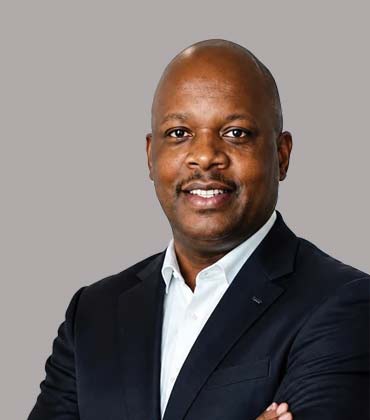
Hardy L. Pelt is Chief Revenue Officer and founding member at Urban Edge Network, a free-access sports media platform dedicated to NAIA and HBCU athletic content. He previously served as Vice President of Corporate Sales and Services for the Golden State Warriors and held corporate sales leadership roles with the Portland Trail Blazers.
My career started in a place most people would overlook. In 1988, I was a ball boy and equipment manager for the Orlando Magic. Nobody in that room was paying attention to me, and that turned out to be the best lesson I ever received.
Billionaire owners, general managers, vice presidents and head coaches would talk strategy, debate decisions and map out the business of a franchise right in front of me as though I was not in the room. I listened to every word. What I was really learning, without knowing it at the time, was how to identify value in places other people were not looking. That habit never left me.
Building the Philosophy
From Orlando, my path took me to the Portland Trail Blazers as a corporate sales manager, where I began putting that early lesson into practice. Then came the opportunity that sharpened it, my role as Vice President of Corporate Sales and Services for the Golden State Warriors. A championship organization reinforced a simple idea: find value where others do not by following fundamentals. I kept building on it.
That philosophy led me to Urban Edge Network. This time, I was building my own organization, not applying it inside someone else's. I have always believed that instead of chasing brands, you should build something worth chasing. Urban Edge is the proof.
The Case for Free
Urban Edge Network is a sports media platform built around NAIA and HBCU athletic content, conferences and institutions that historically sat behind paywalls, drawing loyal audiences but generating limited commercial data. We made a deliberate decision to remove those paywalls entirely, and treated the decision itself as the revenue strategy.
A significant portion of our audience had spent years accessing this content through paid models, so we had to re-educate them that the platform was now free and explain what advertising-supported access meant for them, their institutions and the viewing experience.
Free access removes friction. As friction drops, audiences grow. As audiences grow and stay, engagement deepens and first-party data compounds. That engagement becomes monetizable through sponsorship, programmatic advertising, shoppable live content and contextual marketing during games. Subscription revenue is a ceiling. Scale is not.
Greater accessibility has also expanded visibility for the institutions. Schools that have existed for a century are now reaching audiences that never knew they existed.
We recently completed case studies with McDonald's, TurboTax and a couple of other brands. The results showed strong loyalty, return on media investment and measurable purchasing activity by highly engaged, community-driven audiences that the market has historically undervalued. Underserved does not mean low value. It means the value has not been recognized.
Revenue Leadership Is Not About Selling
My mentors shaped how I think about revenue more than any training. They kept pushing the same point, prioritize long-term value over short-term wins. Long-term thinking is not a natural instinct for salespeople; we want the quick close. But the best revenue strategy is not the one that closes fastest. It is the one that serves both the partner and the platform over time, and that requires discipline.
Some of our toughest decisions come when growth moves faster than our operational readiness or our partners' expectations. Expanding inventory can increase revenue, but it has to be balanced against product quality, audience experience and what we have committed to deliver. We structure partnerships in phases, using audience feedback to guide how and when we scale.
I often describe building Urban Edge the way I would describe training for a boxing match. Between an MBA and years of consulting work, I had already done plenty of roadwork and sparring. None of it prepared me the way founding Urban Edge did. That was the fight itself. It required vision, patience and resilience, but most importantly, execution.
At Urban Edge, we carry significant commercial inventory during live broadcasts, including picture-in-picture squeezebacks, LBARs and in-game integrations alongside traditional breaks. That inventory increases CPMs and expands what we can offer brands, but also creates tension with the viewing experience. Many viewers understand that ads support their schools. They simply do not want them to interrupt the game.
We addressed that by being transparent with athletic directors and conference leadership and by structuring partnerships in phases, building toward scale rather than extracting from it immediately. Revenue professionals who only chase transactions eventually run out of relationships. The ones who build ecosystems keep growing.
What We Are Building Next
The least visible part of our work is where the next opportunity sits. We are investing in programmatic partnerships, pause ads and QR-enabled shoppable content during live games, monetizing audience intent at the moment of engagement. If a fan wants a uniform or replica gear, we want to make it purchasable without them leaving the screen.
“I want the next generation, anyone who has ever felt underserved, overlooked or misunderstood, to see what we are building and know that it is possible.”
This push also addresses a broader gap. Black-owned media companies have historically had limited access to ad tech infrastructure. For us, closing that gap is both a business priority and a proof point. It demonstrates that we can operate at the same level in programmatic execution, data and monetization, and participate fully in the systems that define this industry. The NAIA has been a strong partner in proving what is possible. We are earning our position through results.
What I Want Urban Edge to Represent
The future of sports media will be shaped by platforms that understand its audience, can reach them anywhere and continue to innovate on revenue. Ease of use, ease of purchase and ease of access need to be built into the experience. Platforms that layer multiple revenue streams without disrupting the viewing experience will define this industry.
Urban Edge is meant to be one of them, proof that what looks overlooked can be built into something real and commercially viable.
I want the next generation, anyone who has ever felt underserved, overlooked or misunderstood, to see what we are building and know that it is possible. There is a seat at that table for them too.
