

European financial ecosystems are seeing increased emphasis on precision-driven capital allocation, where Asset management services play a central role in shaping portfolio outcomes for institutions and individual investors alike. In Europe, shifting capital flows and tighter coordination across markets are encouraging more disciplined investment approaches, where risk exposure is actively balanced against long-term financial objectives. This has led to a stronger focus on portfolio diversification across sectors and geographies, improving resilience during periods of volatility. Institutional investors are also relying more on structured oversight to maintain consistency in decision-making, especially in multi-market environments where regulatory frameworks differ.

Weekly Brief
×Be first to read the latest tech news, Industry Leader's Insights, and CIO interviews of medium and large enterprises exclusively from Financial Services Review
Asset Management Services in Europe
Asset management services help investors manage portfolios and long-term financial strategies across changing market conditions. With a focus on risk control, portfolio planning, performance review and regulatory alignment, they support stronger investment outcomes and more disciplined wealth management.
Solutions
FORTUNA SFP
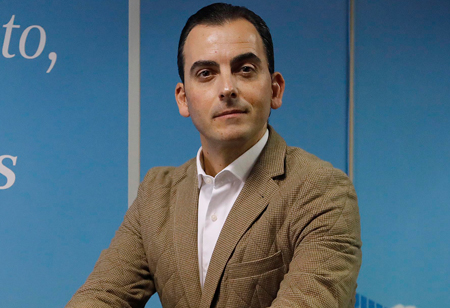
Rethinking Wealth Protection in an Era of Structural Uncertainty
José Manuel Marín Cebrián, CEO
For decades, traditional financial institutions have approached asset management through a narrow and outdated lens. Wealth preservation became closely tied to standardised portfolios, bank-led products and conventional investment vehicles that promised stability while leaving investors disconnected from how their money was actually being managed. Clients are expected to trust institutions, hand over their capital and accept strategies shaped by commercial priorities rather than individual financial realities.
State of Industry
Deep Dive
Choosing Asset Management for Capital under Pressure
Idle capital has become harder to defend when cash balances lose buying power, borrowing costs stay uneven, tax bills cut into returns and familiar bank products do not always match the way owners manage risk. Asset management decisions in business financing sit closer to balance-sheet discipline than portfolio preference. The buyer is not only asking where money can earn a return. The sharper question is how capital will behave when inflation and tax exposure narrow the room for error.
Leadership Perspective

Íslandsbanki
The Future of Asset Management is Personal and Digital
Hildur Eiriksdottir, Executive Director, Asset Management
Hildur Eiriksdottir, Executive Director, Asset Management at Íslandsbanki, has over 20 years of experience in Iceland and Luxembourg. She leads with empathy, innovation, and deep market insight, championing client trust, team development, financial literacy, and sustainable, technology-enhanced asset management.
Asset Management Services in Europe Info
Q1
What Do Top Asset Management Services in Europe Do?
Asset management services help individuals, institutions and organizations shape investment portfolios around financial goals, risk tolerance, time horizon and regulatory expectations. Top Asset Management Services in Europe typically cover portfolio construction, allocation strategy, fund selection, monitoring, reporting and ongoing revisions when market conditions change. The category matters because investors often need professional oversight to balance growth, income, capital preservation, liquidity and long-term planning across a complex European investment environment.
Q2
What Services Are Included in European Asset Management?
European asset management may include discretionary portfolio management, advisory mandates, multi-asset strategies, sustainable investing, retirement planning support, risk analysis and access to fund or alternative investment options. Top Asset Management Services in Europe can also support performance reviews, tax-aware planning coordination, client reporting and governance needs for institutional portfolios. Scope varies by provider, but the purpose stays consistent: connect capital with clear financial objectives and keep investment decisions aligned as circumstances shift.
Q3
Why Is Demand Growing for Asset Management Services in Europe?
Demand is being shaped by market volatility, retirement planning pressure, sustainability expectations, inflation concerns and the growing complexity of investment choices. Top Asset Management Services in Europe are drawing attention as investors look for clearer guidance across public markets, private assets and digitally supported investment platforms. Many clients now want more than product access. They need disciplined portfolio oversight, transparent risk management and advice that can adjust when economic conditions change.
Q4
How Are Leading European Asset Management Services Evaluated?
Investors and institutions often look closely at investment process, risk controls, transparency, fee structure, regulatory discipline, reporting quality, client service and long-term performance consistency. Top Asset Management Services in Europe are not assessed only by returns. Strong asset management also depends on suitability, governance, communication and resilience across market cycles. For institutional and high-net-worth clients, due diligence may include operational strength, compliance culture, investment team depth and the ability to explain strategy without unnecessary complexity.
Q5
How Do Asset Management Services Create Value for Clients?
Asset management creates value by helping clients make informed decisions, avoid poorly matched investments, control downside risk and stay disciplined during uncertain markets. Top Asset Management Services in Europe can support better allocation choices, improved diversification, clearer reporting and stronger alignment between investment activity and financial priorities. That value becomes especially important when clients face cross-border considerations, changing regulations, succession planning or the need to protect capital while still pursuing long-term growth.
Q6
What Role Do Innovation and Expertise Play in European Asset Management?
Expertise still matters because asset management depends on judgment, research, risk awareness and a practical understanding of client goals. Top Asset Management Services in Europe increasingly combine professional insight with digital reporting, data analytics, responsible investment frameworks and more personalized portfolio tools. Technology can improve access, monitoring and transparency. Experienced investment teams help interpret market signals, weigh uncertainty and make sure digital tools support thoughtful decisions rather than replace them.
