


Weekly Brief
×Be first to read the latest tech news, Industry Leader's Insights, and CIO interviews of medium and large enterprises exclusively from Financial Services Review
Financial Services Review: Specials Magazine

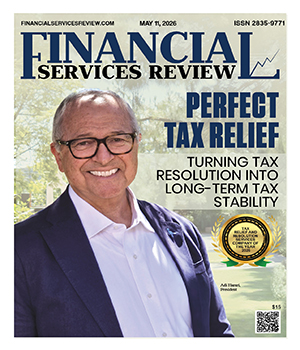
What issues do taxpayers face when tax obligations compound without structured resolution plans? For many taxpayers, tax relief begins after financial obligations have built up over time and the need for a structured way forward becomes more immediate. A business owner who thought the problem was temporary suddenly finds that the debt, penalties and compliance issues have compounded into something far harder to control. That is where many tax resolution firms enter the picture. But Perfect Tax Relief was not built to operate as a last-minute transaction shop that moves from case to case, chasing quick settlements. Relief means little if it ends with a settlement but no structure to keep the client compliant afterward. Since its founding in 2009, it has built its model around a broader idea: meaningful tax relief lasts only when it is tied to structure, compliance and a clear path that keeps clients from falling into the same trap again. “Our work begins with the client’s immediate burden, but it does not end there,” says Adi Harari, president. “The larger goal is to create a path that not only resolves current exposure, but also helps prevent the same patterns from returning.” At the center of that model are two operating principles: a customer-centric mindset and a technology-centric workflow. Together, those principles have helped Perfect Tax Relief position tax resolution as a structured service built on trust, analysis and follow-through.
Top Independent Investment Consulting 2026
Bringing Institutional Discipline to Modern Investment Decisions What core principles define LCP Institutional’s fiduciary approach to investment consulting services? LCP Institutional operates as an independent fiduciary investment consulting firm built on a clear premise: financial advice should be structured, accountable, and aligned entirely with the client’s best interest. Unlike traditional broker-led models, where recommendations may be influenced by products or incentives, LCP Institutional removes competing interests from the equation. Its approach is grounded in fiduciary responsibility and a disciplined, process-driven framework that delivers consistency in an increasingly complex financial environment. “We focus the business as a very client-centric firm. Clients do come first here, because I take fiduciary responsibility very seriously,” says Carolyn Larocco, CFP, CIMA, President, CEO / Senior Consultant. This philosophy translates directly into how the firm operates. Every engagement is guided by a structured methodology that includes investment policy development, asset allocation, due diligence, cash flow management, and performance measurement. Rather than addressing financial decisions in isolation, LCP Institutional builds a coordinated strategy where each element supports a defined objective. How does LCP Institutional serve both institutional organizations and high-net-worth individuals? The firm serves two primary client segments. On the institutional side, it works with mission-driven organizations such as nonprofits, foundations, and religious institutions, where investment decisions must reflect both financial goals and broader purpose. On the individual side, LCP Institutional advises high-net-worth clients, many of whom seek to align their portfolios with environmental and social priorities.

Financial Advisors Digital Marketing Platform of the Year 2026

FMG
Powering Organic Growth in Wealth Management
Susan Theder, Chief Marketing and Experience Officer
What challenge does FMG address regarding organic growth in wealth management firms today? FMG has carved a distinctive niche in the wealth management landscape by addressing a challenge that has become increasingly elusive for financial advisors: organic growth. While mergers, acquisitions, and other forms of inorganic expansion dominate industry headlines, FMG positions itself as more than a marketing platform. It is an engine that powers growth at its roots, operating at the intersection of compliance, content, and technology. “The bigger story is about addressing the challenge in the industry facing all wealth management firms, which is organic growth,” said Susan Theder, Chief Marketing and Experience Officer. “FMG is a platform that powers an engine that drives organic growth in the wealth management industry and exists at the intersection of compliance, content, and growth technology in a way that no martech platform can replicate.” Founded in 2011, FMG emerged in response to a growing recognition that traditional marketing tools were insufficient for the unique needs of advisors. A decade ago, a website was the pinnacle of an advisor’s marketing strategy. Social media soon followed, first as a curiosity and later as a necessity. Today, the landscape demands a fully integrated client acquisition engine.
CXO INSIGHTS

The Embedded Finance Incursion: Banking Asa- Service & Credit Cards
Marc Butterfield, Sr. Vice President, First National Bank of Omaha

SEO for Financial Services: Challenges with Terminology
Laura Cameron, VP, Digital Marketing, KeyBank

Diversity and Inclusion in the Credit Market
Margaret Chamberlain, Vice President of Risk Management, OneAZ Credit Union
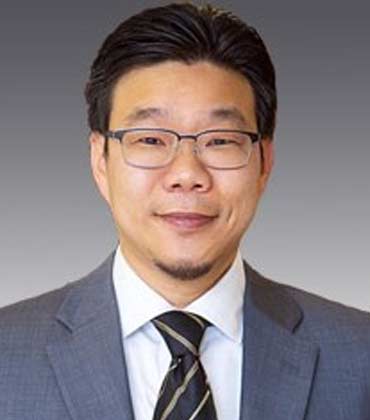
The Role Of Accounting In Financial Compliance And The Impact Of Foreign Exchange Rate Fluctuations
Richard Kung, Chief Financial Officer, CTBC Bank Corp. (USA)

Adapting to Innovation and Growth in the Fintech Industry
Chad Schmookler, Vice President, Special Projects, InComm Payments


IN FOCUS

Digital Transformation in Financial Advisory: Unlocking New Growth Opportunities
Specialized digital platforms enable financial advisors to achieve compliant, data-driven, and scalable marketing growth.

Minimizing Tax Liabilities: Essential Services for Business Resilience
The services for tax relief and resolution support businesses in two ways, which include decreasing their tax responsibilities and settling their tax conflicts, and improving their financial planning activities for the long term.
EDITORIAL
Sustained Performance in Modern
Financial Ecosystems Financial ecosystems are being reshaped by the need for structured resolution, scalable client engagement and disciplined investment oversight. In this edition of Financial Services Review, the focus brings together firms that are redefining how financial stability, growth and advisory precision are delivered across increasingly complex client environments.
A defining highlight is the cover story on Perfect Tax Relief, recognized as Tax Relief And Resolution Services Company of the Year 2026. The firm distinguishes itself by repositioning tax resolution as a long-term stability framework rather than a transactional service. Through a compliance-first methodology, layered case analysis and technology-supported workflows, it ensures that resolution is sustained through structured follow through. By aligning automation with human judgment, Perfect Tax Relief delivers outcomes that extend into durable financial control.
In parallel, FMG Suite, awarded Financial Advisors Digital Marketing Platform of the Year 2026, addresses one of the industry’s most persistent gaps, organic growth. Its integrated platform combines compliant content, AI-driven tools and omnichannel execution, enabling advisors to maintain consistent and personalized client engagement within regulatory constraints. This approach transforms marketing from an operational burden into a measurable growth engine.
LCP Institutional, recognized among Top Independent Investment Consulting 2026, reinforces the importance of fiduciary discipline. Its process-driven advisory model brings institutional rigor to nonprofit and high-net-worth clients, ensuring that investment strategy remains aligned with long-term objectives through structured planning and accountability.
Expert perspectives deepen this narrative. Enzo Tolentino, Head of Audit - Corporate Digital Audit at Banco de Crédito BCP, outlines governance frameworks required for agentic AI adoption in finance. Complementing this, Mohamed Bamba, Senior Vice President – Head of Business Risk and Controls at BankUnited, highlights the growing importance of structured risk assessment and advanced fraud detection in safeguarding financial systems, emphasizing how data-driven analysis and cross-functional collaboration strengthen resilience against evolving threats.
Collectively, this edition reflects a shift toward integrated financial models where resolution, engagement and advisory converge to deliver resilience, clarity and sustained performance.
